SENSO SPAZIO – LA RESTITUZIONE #2 (EN)
Senso Spazio – The Showing #2
Senso Spazio began in 2022 as a photographic research workshop about the sense of a place: what makes it one, whether it exists before being lived in, crossed, looked at, or whether it is the gaze of those who cross it that brings it into being.
The workshop is open to occasional photographers, professionals and amateurs alike, with no distinction of experience or training. That openness is the foundation of the project: Senso Spazio selects an intention first of all, not necessarily an aesthetic, and asks each participant to enter into a genuine relationship with a place they had often never chosen to photograph before. It follows that the aim of the exhibition is not only a visually pleasing result. What matters is an honest account of how this group of people perceived these places — people who, for the occasion, become authors, and who test themselves in order to build through photography something that did not exist before: a concrete sense for a place that until then had no shape for it, and had not asked to be looked at.
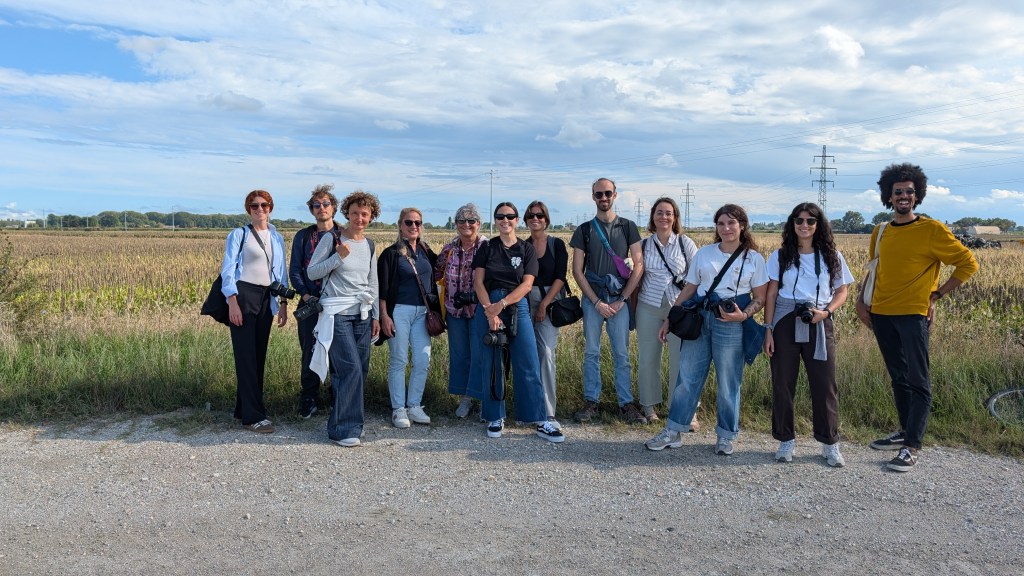
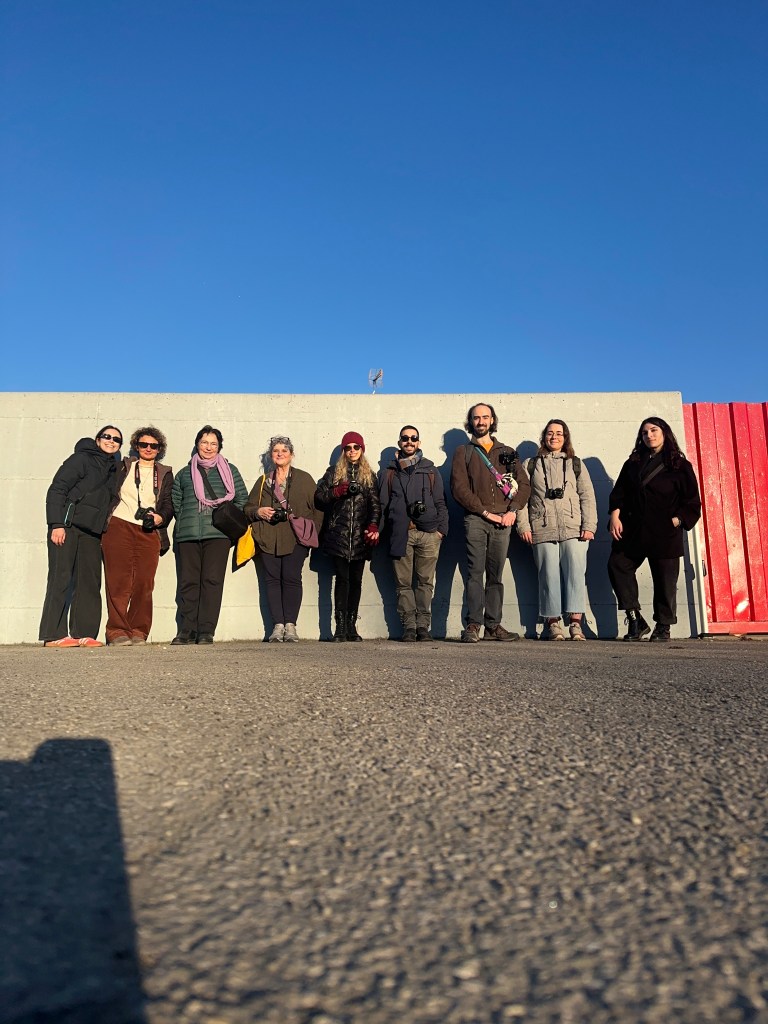
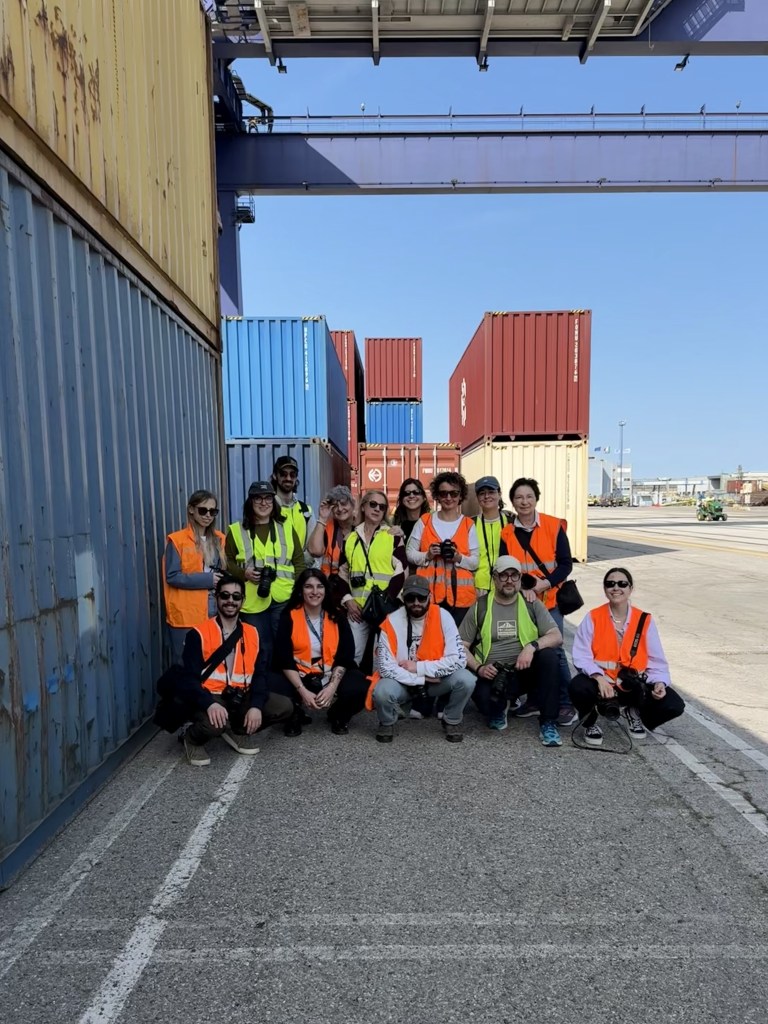
This edition of the programme brings together three stages travelled over the past year: Fornace Zarattini, the Bassette and the Port of Ravenna.
At Fornace Zarattini the workshop worked on the loss of a shared civic consciousness — the kind a village loses as it becomes a district of the city, a place most people simply pass through. The group engaged with photographic work that speaks of the transformations of the outer urban landscape, where housing, offices and commerce meet without a break: the result of the city absorbing the identity of a community that was once its own. Yet it takes only a turn off the main road to find, among the inner streets, the remains of that older community.
At the Bassette, what was investigated instead was the dissolution of an identity that Ravenna once had there: that of a commercial area of reference. What happens to a place born with a precise purpose when it loses its original function? Today the Bassette carries the marks of that shift. On one side it remains a commercial hub more than ever, given over to work as a centre of production and services for the city’s manufacturers, yet little frequented by the citizens themselves, who visit it wearing the worker’s hat and forget it exists at the end of the shift. On the other it has become an area marked by neglect, a consequence of its distance from the city centre and from the shopping districts that have drawn the city’s attention elsewhere.
At the Port, finally, we measured ourselves against the condition of a port city that struggles to recognise itself as one. Born and grown as an industrial engine after the Second World War, the port has continued to expand and change while remaining, for much of the city, someone else’s workplace rather than a feature of its own shared identity. The workshop began from this distance in perception, and asked what it means to live in a city built, historically and economically, around its own port, and which nonetheless struggles to include it in its own image.
As an association, CocciRotti accompanies participants through every stage of Senso Spazio, from the first site visit to the shot itself. Many of the authors exhibiting today have never carried a photographic project of their own through on their own. Support therefore extends to technical matters as well, when needed, without ever steering the choice of what to photograph. Once the shooting is over, the work moves to a collective edit: a moment that often helps the authors themselves to understand what they have caught, and what, in the end, they wanted to tell. In its own way this is a familiar process in art, where it is not unusual for the final point of view to emerge precisely from the selection made in editing.
The photographic medium rests largely on a binary choice: what to include in the frame, and what to leave out. Deciding where to place the border around a setting that stands before us in the real world is a concrete choice, and it is the one we set about making whenever we take a photograph. Technique, through study and practice, refines that choice: the search for subjects, for symbols, the control of distractions at the edges of the frame. But in the first attempts the input is almost always a single one: what am I choosing to include, what am I choosing to cut out? Or, to put it simply: what draws my attention?
The deeper we went into Senso Spazio, the more we noticed that every eye is naturally different: technically particular, carrying a history of its own. Faced with the same place, each author composes a narrative of their own, necessarily different from the others; because the eye is different, the hand is different, and different too is what that eye is drawn to treat as important. For us this is exactly what gives the project its final sense:
each person builds their own narrative fabric, made of what they love, what they fear, and what they ultimately hold to be important.
During our previous showing — dedicated to Baiona, Marina di Ravenna and the Pineta — we were asked more than once why we had chosen photographs that, apparently, said nothing about the place the outing was about. The conceptual core of the project turns on a paradoxical question: how can a photographic image, made at a specific site, reveal nothing of it, and remain unrecognisable even to those who have been there? This apparent contradiction comes from a clear intention on the author’s part: to favour a non-conforming account of a place in our city, which is to say the effort to look for an independent and personal narrative of urban space. That is precisely what has produced photographs that are entirely original, irreverent or far from what was expected.
So we asked ourselves: does it make sense to look for cosmic space inside the Bassette? Probably yes. Is the concrete the Port is built on characteristic of it, even though concrete is found everywhere, in every corner of our daily lives? Yes. Do we really want to sum up Fornace Zarattini with a soft toy wedged inside a car? Certainly — just as a brick can become a nest, for someone looking for nature where there seems to be no trace of it; just as, for someone else, a place makes no sense to tell except through its own reflections, in a dreamlike register that helps a photographer place something reassuring in front of a place that makes them deeply uneasy.
Senso Spazio does not offer a geographical map, then, but an emotional geography. In this second showing, Fornace Zarattini, the Bassette and the Port stop being simple coordinates or scenery to pass through, and become intimate, unexpected territories. Because a place does not truly exist until there is a gaze ready to fill it with meaning: and it is in that free margin — between what the city shows and what each author chooses to see in it — that photography returns to being an act of pure creation.
 CocciRotti - Associazione di Promozione Sociale